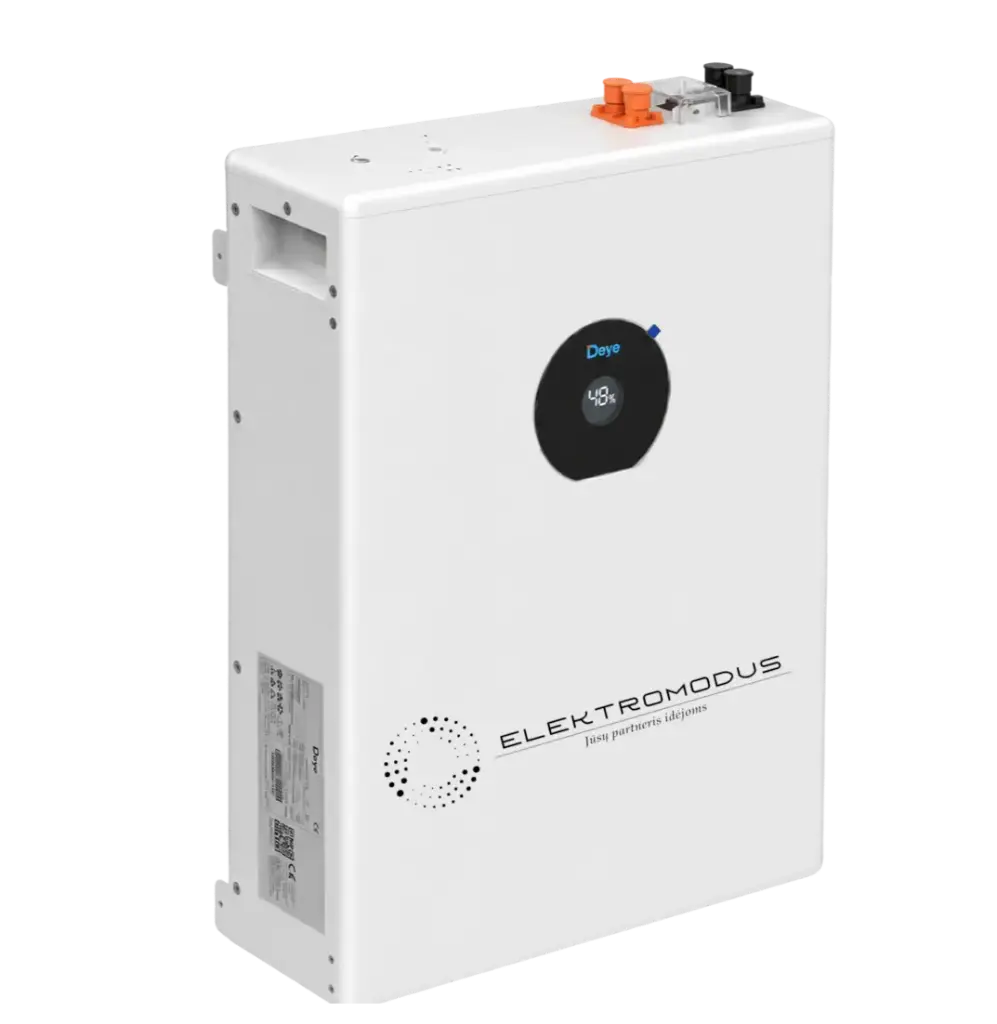
LiFePo4 Deye LV Energy Storage System SE
Delivery takes 2-5 business days, you can also pick up the goods in Vilnius or Šiauliai. If you have any questions: info@elektromodus.lt

Greater energy independence through the use of
Deye low-voltage home energy storage systems
Deye LV energy storage units are designed for residential hybrid systems where compactness, ease of installation, and the ability to expand capacity later are important. Compared to high-voltage rack-mounted systems, they take up less space and are better suited to various technical room layouts. Depending on the chosen model, the unit can be wall-mounted, floor-standing, or integrated into a modular system.
The storage unit automatically saves energy generated by the solar power plant, allowing it to be used in the evening, at night, or during power outages. With a dynamic tariff, the system can also charge during the cheapest Nord Pool hours and reduce electricity purchases during peak-price periods—functionality that requires no additional Home Assistant integration. Since both the battery and the hybrid inverter are manufactured by Deye, the system operates using unified BMS communication, making it easier to configure and more reliable to service under warranty.
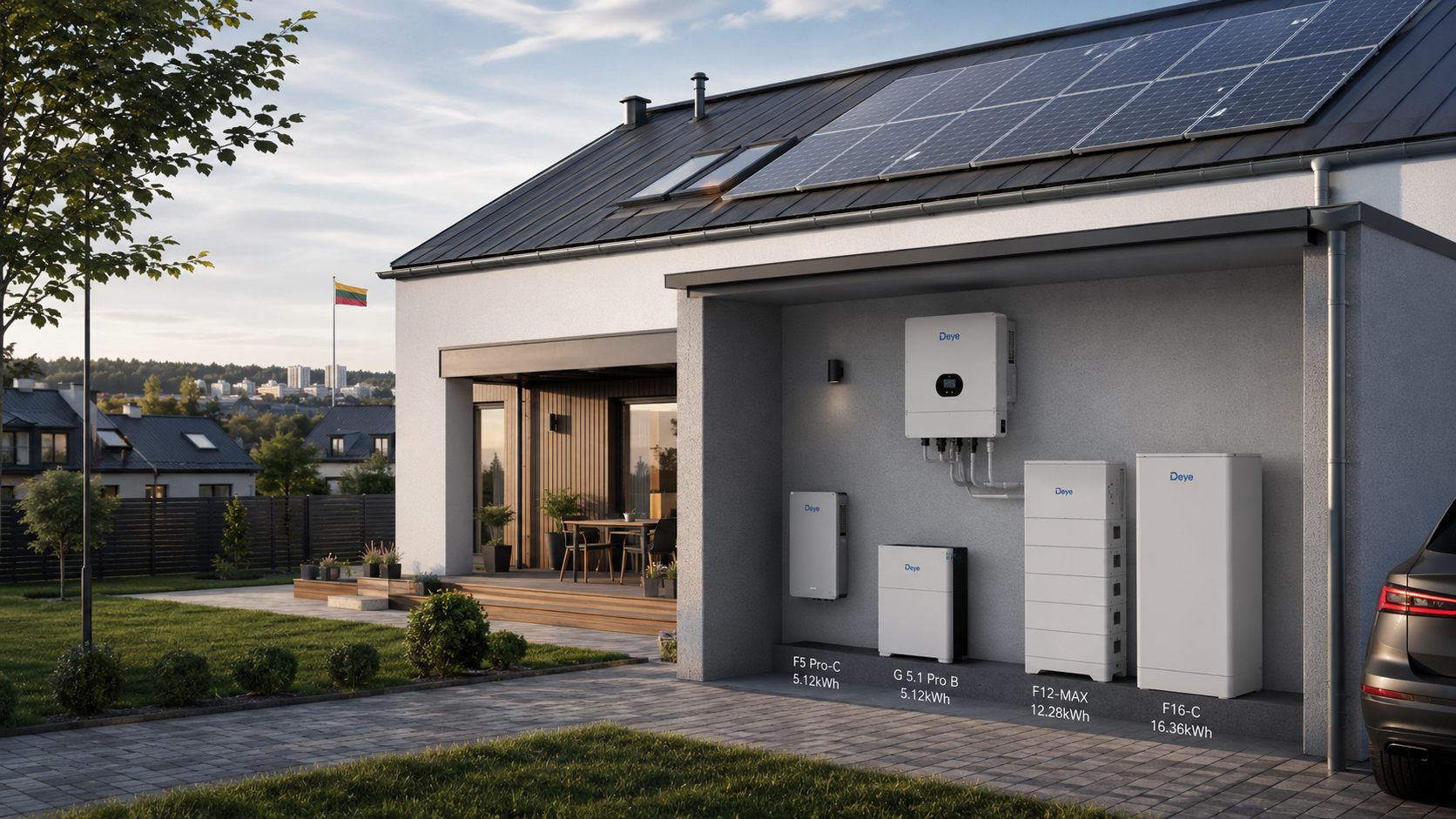
Deye renewable energy systems – an integrated solution, wide range of applications
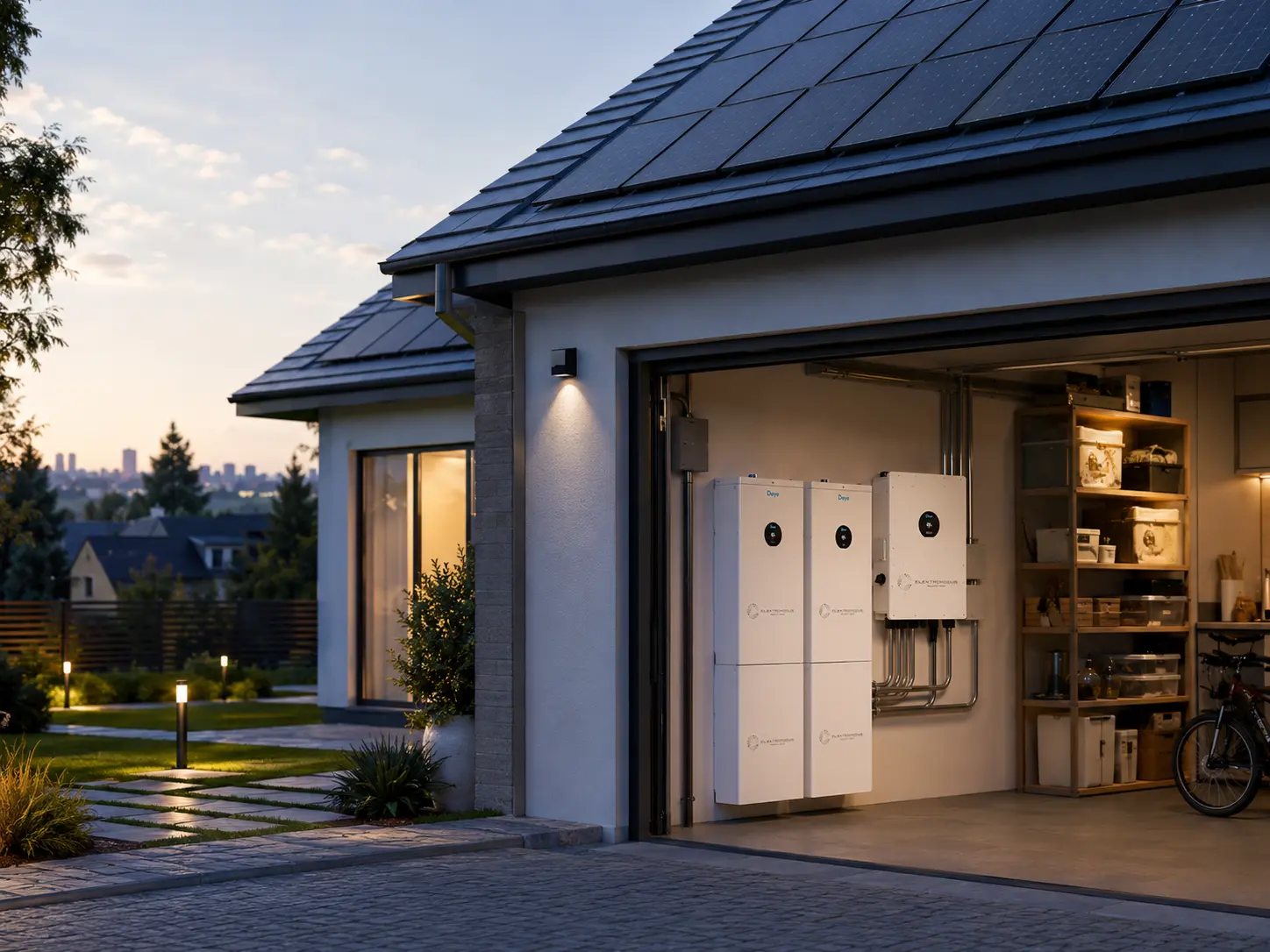
Flexible installation
Floor-mounted, wall-mounted, or in modular blocks, depending on the selected model. Requires less space compared to HV products.
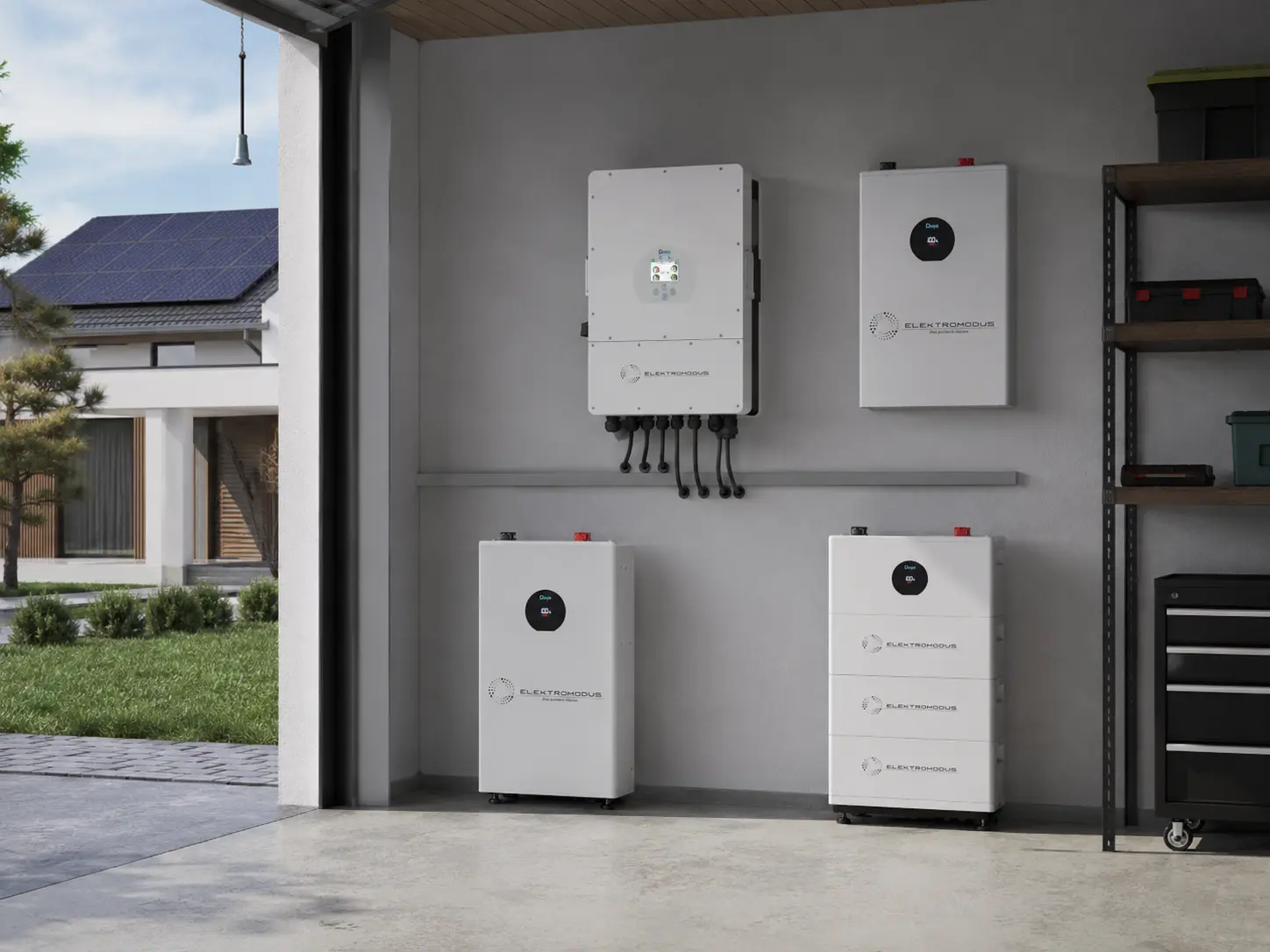
Expandable capacity
You can start with the minimum number of storage units specified by the manufacturer and subsequently connect additional ones in parallel.
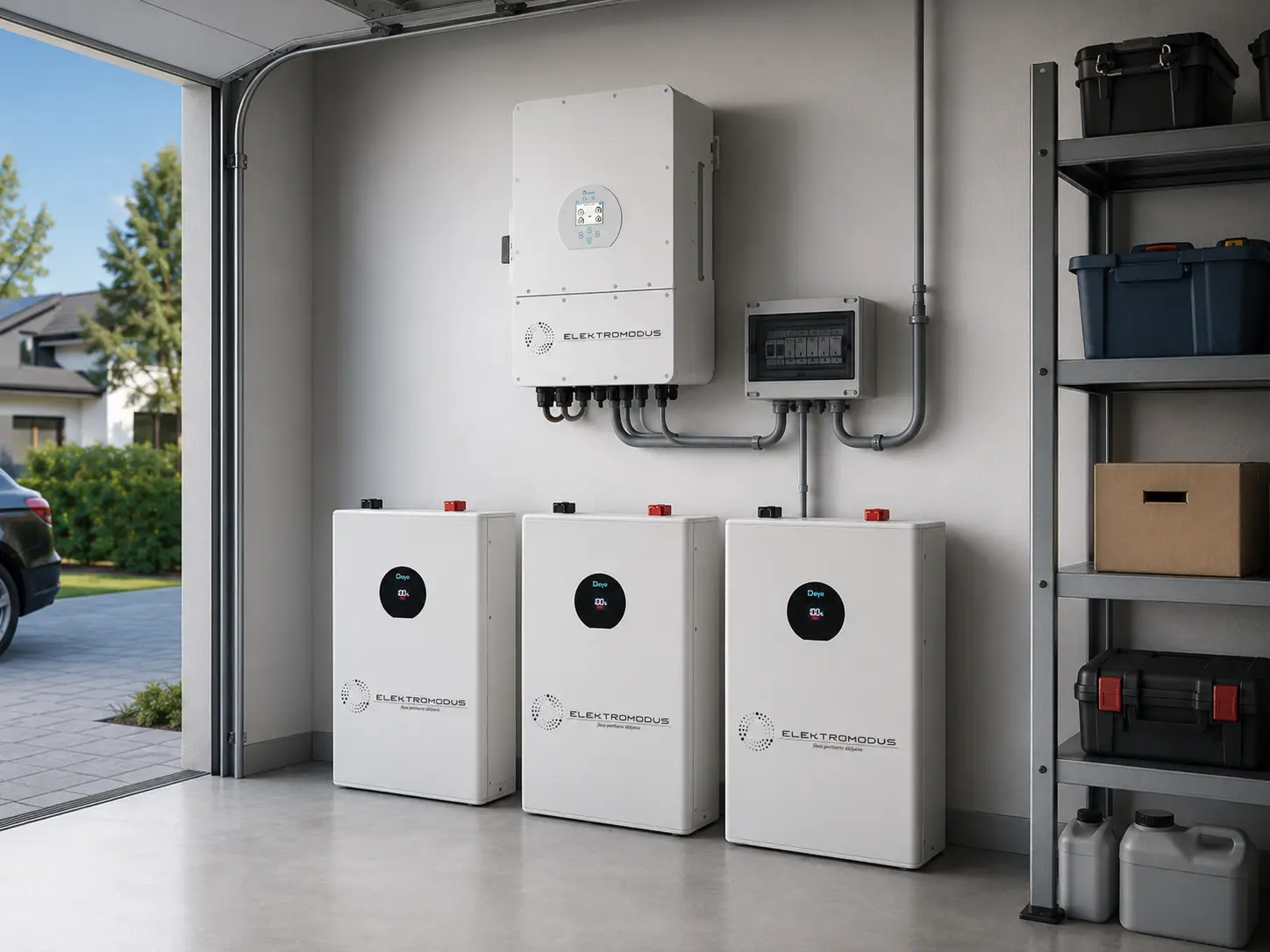
Unified Deye system
Direct BMS communication with the Deye hybrid inverter results in fewer compatibility issues. A unified cloud system allows data to be viewed on a single platform; the SOC mode is more user-friendly compared to Batt-V.
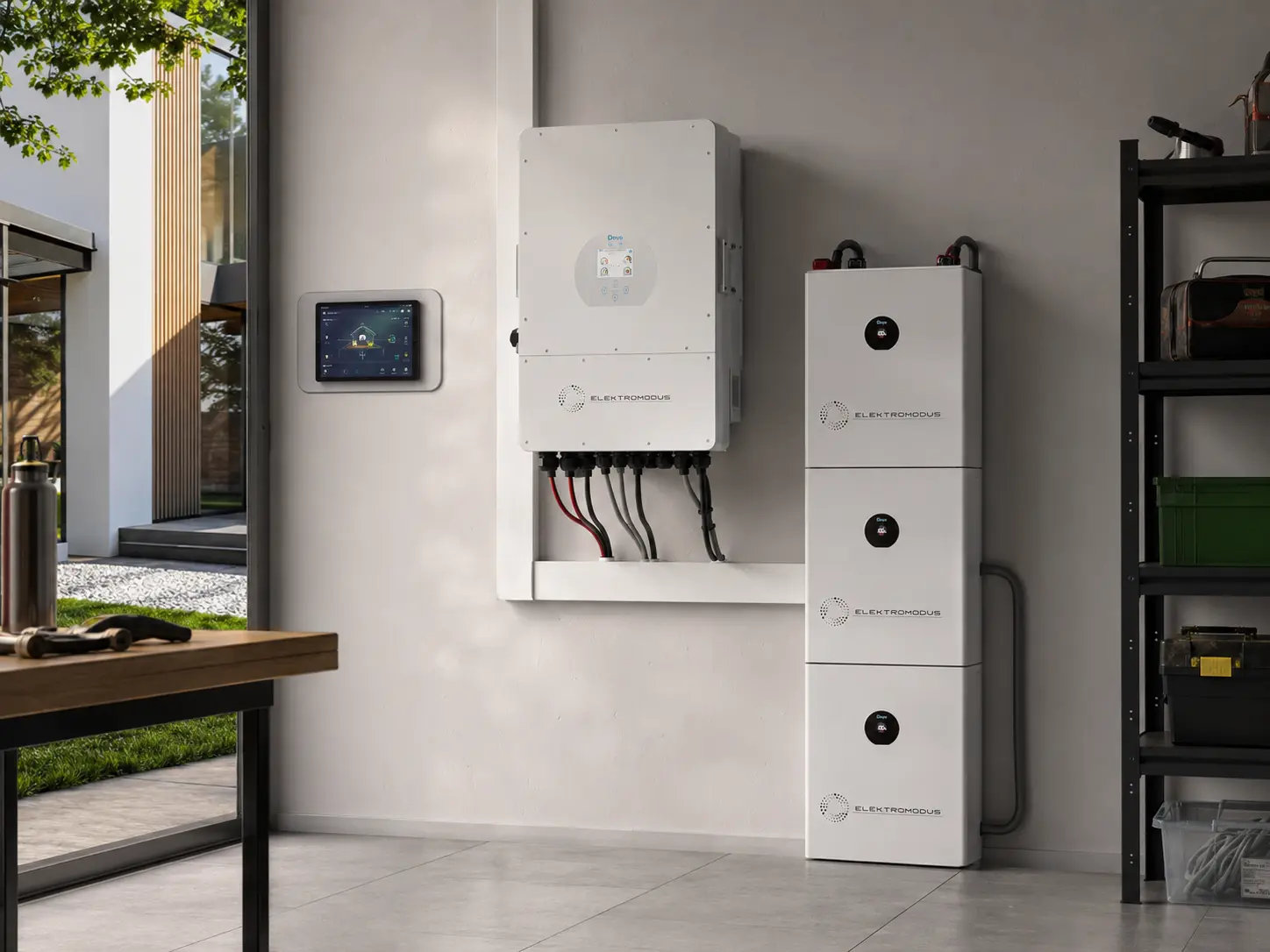
Home energy management
Solar energy storage, backup power during outages, integration of a generator or auxiliary power source, and selling energy from the battery—all for your smart energy management.
Flexible mounting solutions
Deye LV storage systems adapt to your home and needs.
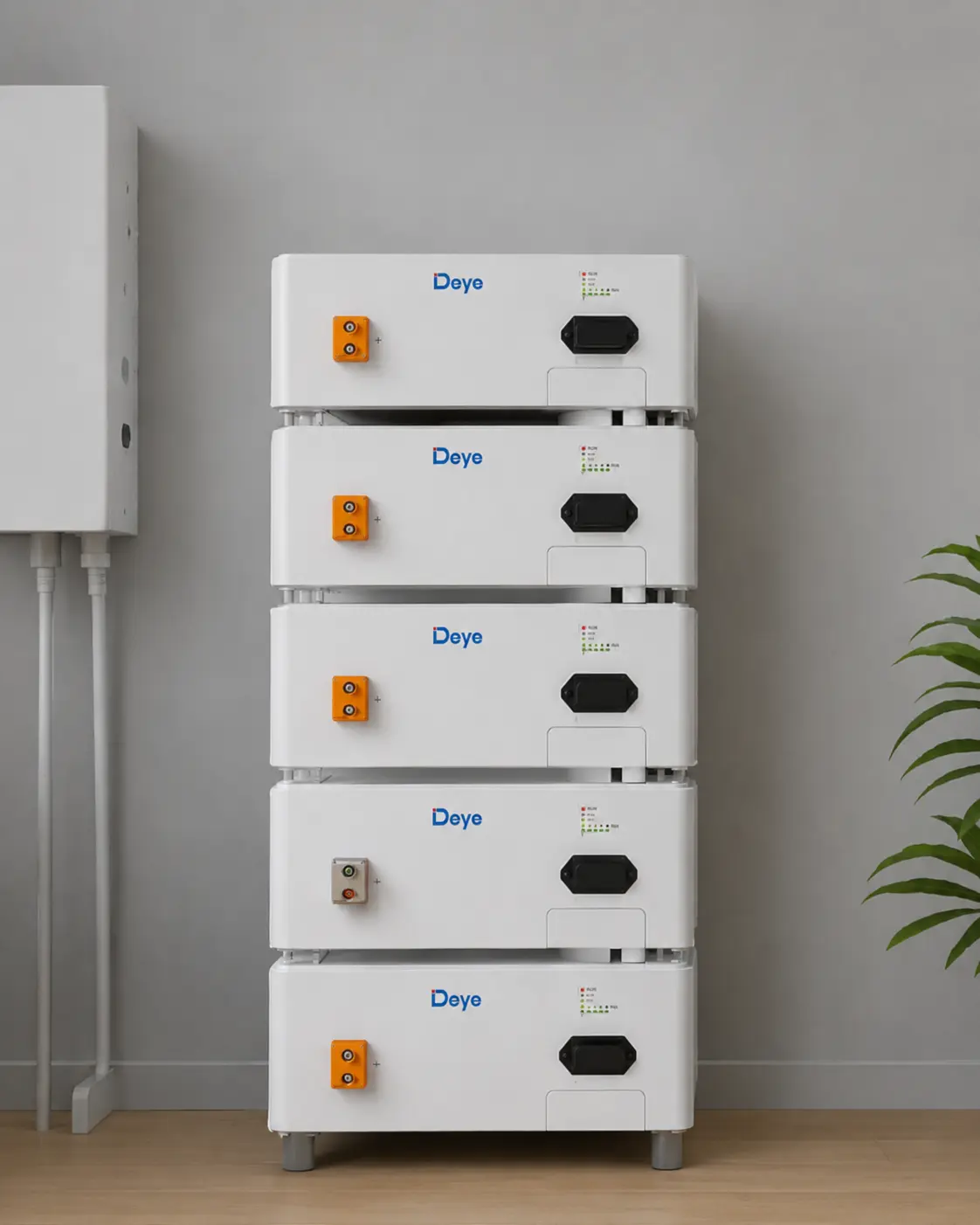
Modular Stacking
Energy storage units can be stacked on top of one another—an excellent option for space optimization when you want to utilize the area above the units, for instance, by installing a countertop or a shelf.
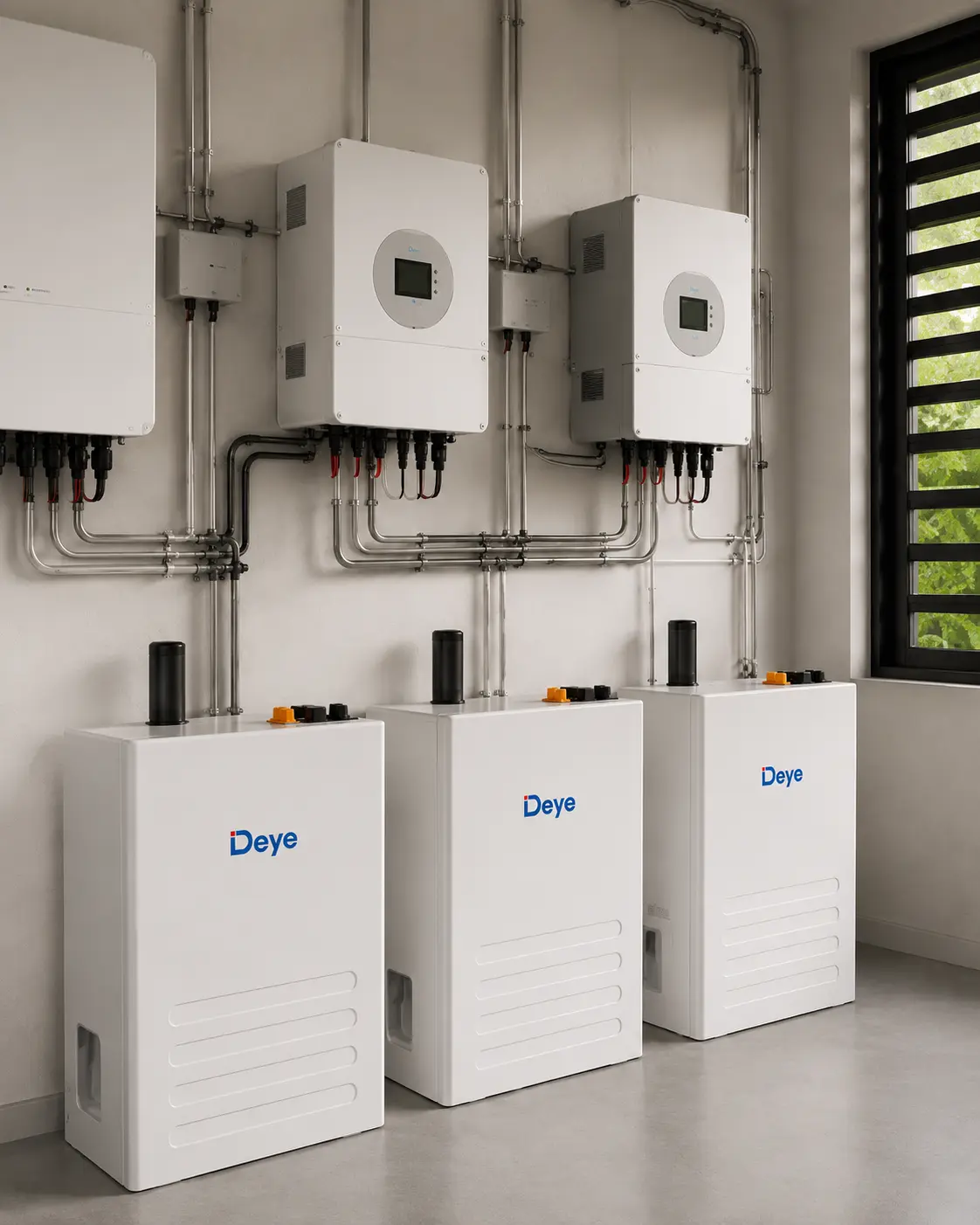
Batteries in parallel
This is particularly relevant for EV drivers or for facilities with high nighttime energy consumption and extensive needs during power outages. A larger amount of energy provides greater flexibility.
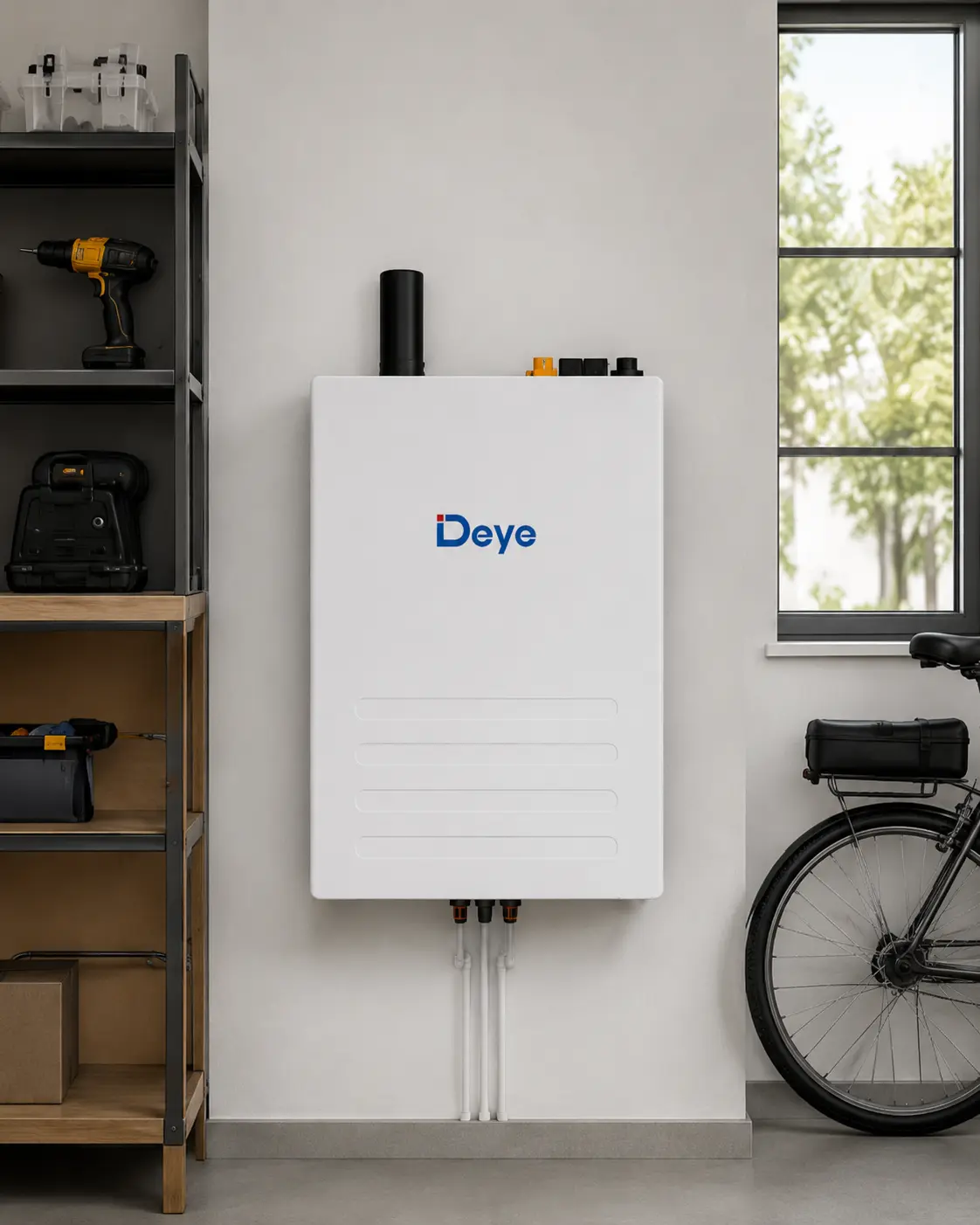
Wall/Floor-mounted
It takes up less space and offers flexibility in choosing the installation location. It is ideal for small utility rooms, garages, or storage areas. Mounting hardware is included with the units.
A few observations
Kodėl verta rinktis Deye Why choose a Deye battery storage system with a Deye inverter?su Deye inverteriu?
Simpler startup
Less manual configuration and a lower probability of communication errors.
Clearer technical support
There is no need to determine which of the two different manufacturers is responsible for the problem.
Smoother warranty claim processing
The system is evaluated as a single-vendor solution.
Need help?
In this section, we have carefully selected the most frequently asked questions for your convenience. If you have any further questions, please feel free to contact us at info@elektromodus.lt or via the "Contact Us" section.
Capacity is selected based on evening and night-time consumption, the planned minimum State of Charge (SOC) limit, and the desired reserve for power outages. If a household consumes around 8 kWh overnight, a 5.12 kWh battery will not suffice; accounting for a 10% minimum reserve and system losses, a nominal capacity of approximately 10–12 kWh would be required. If a backup reserve of around 30% is desired, a capacity of 12–16 kWh or higher is a more practical choice. Since an electric vehicle has its own separate 60–100 kWh battery, a home storage system typically does not charge it fully but rather reduces grid load or covers a portion of the charging needs.
Yes. Deye LV battery units can be connected in parallel, though the maximum number depends on the specific model. For example, some Deye LV series models support up to 32 units connected in parallel. Expansion must be performed by a qualified installer who ensures the battery status, firmware, and communication are properly synchronized.
Yes, provided the Deye hybrid inverter’s Backup/Load output is correctly connected to the selected household circuits. The maximum backup power depends on the inverter, the battery discharge capacity, and the appliances operating at the time. Simply purchasing a battery does not automatically mean the entire house will have backup power.
Yes, if you have a hybrid inverter. The system can charge the battery from the grid during off-peak hours and use the stored energy when electricity prices rise. A solar power plant can be connected later.
Yes, when using a compatible Deye/Solis hybrid inverter and properly configured dynamic tariff management within the Copilot environment. The system can schedule charging during off-peak hours and reduce electricity purchases during more expensive periods.
It depends on the specific model and its IP protection rating. Some models—such as IP65-rated Deye batteries—can be installed outdoors provided the manufacturer's requirements are met, whereas others are intended solely for dry indoor environments. For instance, the SE-F16-C is marketed as an indoor model, while the heated SE-F16-MAX version is designed to withstand more demanding outdoor conditions; however, given Lithuania's climate, it is recommended to store these storage units in frost-free indoor spaces.
Generally, no. It is recommended to use the same model, identical capacity, and compatible firmware within a single parallel battery bank. Connecting different models is permissible only if the manufacturer explicitly allows it in the specific documentation.
An internet connection is not required for the basic operation of the battery and inverter. However, internet connectivity is necessary for remote monitoring, Deye Cloud functions, certain software updates, and dynamic tariff optimization.
Deye LiFePO₄ batteries are typically designed for a service life of at least 6,000 cycles, though the actual lifespan depends on temperature, charging power, depth of discharge, and usage patterns. Certain Deye series come with a warranty of up to 10 years, subject to the manufacturer's terms.
It is possible, provided the inverter and battery discharge power are sufficient. Battery capacity determines the amount of stored energy, while inverter power and BMS current limits determine the load the system can supply simultaneously.
CONTACT US
Sales questions:
sales@elektromodus.lt
General questions: info@elektromodus.lt
Company code: 306233726
VAT code: LT100015721719
I-V 8:00-17:00
Solar Modules: Trina Solar, Aiko Solar, Jinko Solar.
Hybrid inverters and storage systems: Deye, Foxess, Sungrow.
Please email us the ESO connection terms you have received, and we will contact you. If you do not yet have the ESO terms, you can complete the request via the ESO self-service portal.https://mano.eso.lt/ ).
We design, sell, and provide consultation on solar power plants, and with the help of our partners handle the installation (in the Vilnius and Šiauliai regions).
Process:
1. Your project is evaluated based on grid connection requirements.
2. We discuss installation details and electrical specifications.
3. The installation schedule and price are agreed upon.
4. The power plant is commissioned with ESO, and the necessary documents for APVA funding support are provided.
Specifications
| Battery Model: | F5 Pro-C (5.12kWh), G 5.1 Pro B (5.12kWh), F12-MAX (11.8 kWh), F16-C (16 kWh) |
| Tags | |
|---|---|
| Tags | |